 by Nikola Vejin
Pleneo RoomHub
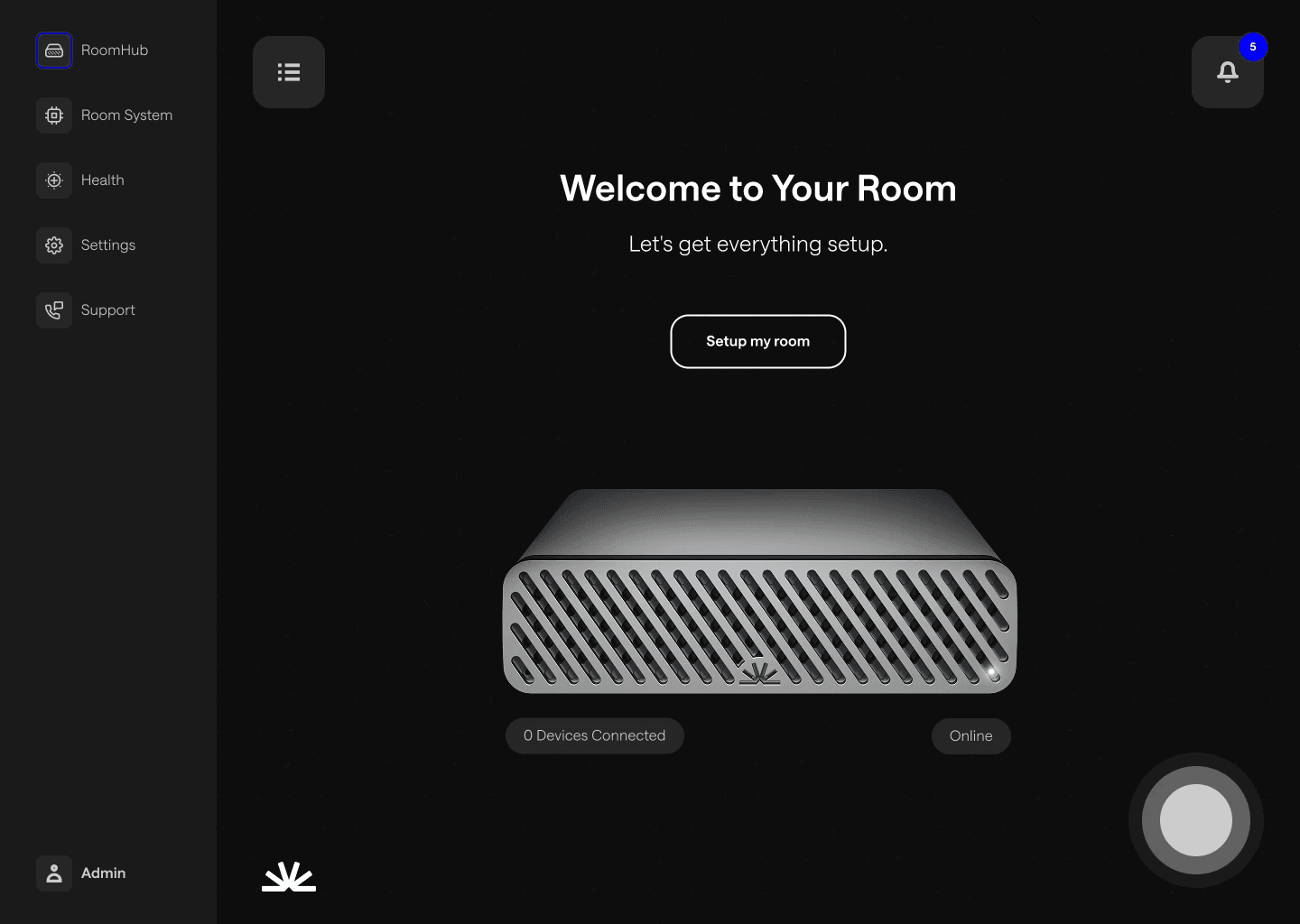
Pleneo makes meeting-room hardware that's supposed to set itself up and then stay out of your way. I built the app that runs on the RoomHub device itself, working from Pleneo's designs and alongside their team. The app covers first-time setup of a brand-new unit, tuning the room, and the interface people use to run that room once it's up.
The projects I enjoy most are the ones that are hard to get right: the problem isn't fully defined yet, and the engineering is really demanding. RoomHub was one of those.
Why it mattered
Getting a meeting room set up properly usually means bringing in specialist installers, and even then the room tends to drift out of tune over the following months. Pleneo wanted to flip that around: hardware that installs and tunes itself, so a company can roll out rooms that all behave the same way across every office. A lot of that promise rests on the software running on the device. It had to take a complicated setup and make it feel manageable for whoever happens to be standing in front of the unit, and then keep working room after room without anyone having to babysit it.
Experience goals
- Anyone can do it. You shouldn't need to be an AV specialist to walk away with a room that works.
- Nothing should feel broken. The device restarts and disappears off the network as a normal part of setup, so the app had to stay reassuring through it rather than looking like something had gone wrong.
- Always one obvious next step. Instead of a screen full of options, you get the single thing to do right now.
- Thorough now, simple later. Detailed enough to get the install right, but light enough to live with once people are just using the room.
- The same in every room. First one or the hundredth, the experience and the result don't change.
What the app delivers
- Takes a brand-new device through first-time setup securely, without any fuss.
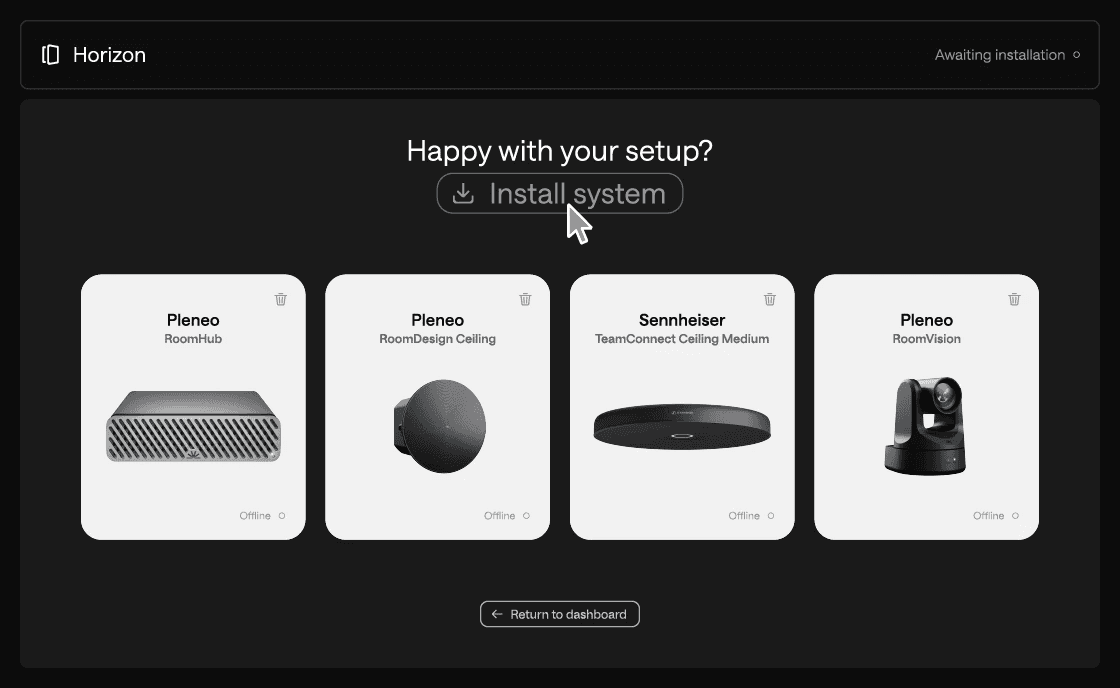
- Finds the cameras, mics and speakers in the room, gets them connected over the network, and gives you a manual fallback for the times something needs a nudge.
- Runs a full check that all of it actually works together, then tells you in plain terms what's working and what isn't.
- Tunes the room's audio by itself.
- Sets up the cameras, automatic tracking included.
- Hands everyday users a simple set of room controls and a live view of what's happening.
- Shows how the device is doing, and lets you export a report when support needs one.
- Keeps the device up to date, with updates that install cleanly without breaking the room.
Challenges
- Hiding the complexity. There are a lot of moving parts here, plenty of devices and plenty of steps, and the whole point was that none of that should show. It needed to feel like a single straight line.
- Holding up when the device goes quiet. It restarts and drops off the network partway through setup, which is completely normal, so the app had to anticipate that and pick the process back up cleanly instead of treating it as a failure.
- Staying honest in real time. Whatever's on screen has to reflect what's actually happening on the device and the equipment around it, right as it happens.
- Living on the hardware. The app runs on the device itself rather than on a comfortable cloud server, and you have to work within the limits that come with that.
- Designing for rooms I'd never see. They vary in size and in the mix of cameras, mics and speakers, and the same app had to handle all of them without me ever being in the room.
How I approached it
Under the hood it's the same web stack I'd reach for on a polished cloud product, Next.js, React and TypeScript, except here it runs directly on the device rather than on a server. The screen stays in step with the hardware as things happen, so what you're looking at always matches the real state of the room. Most of the work went into the parts nobody notices when they're done right, like recovering cleanly when the device restarts or drops off the network, giving people an obvious way forward when something doesn't go to plan, and pacing the setup so a few fairly technical minutes never feel tense.
Outcome
The result is one app that handles first-time setup, tuning, and then the everyday running of the room. A setup that would usually need a specialist on site is a process you can follow yourself, which is exactly what Pleneo set out to make possible.
You have done amazing work on RoomHub, Nikola, and we couldn't have made RoomHub without you.


